
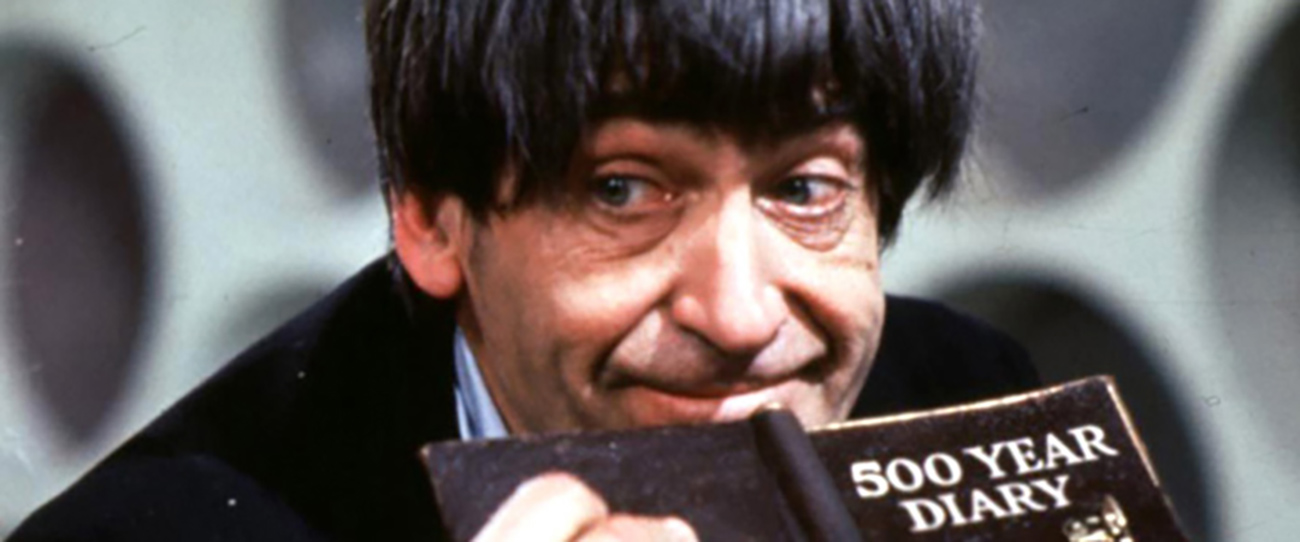
Patrick Troughton (1920–1987)
Patrick Troughton. The man, the myth, the mop-haired recorder enthusiast. He stepped into the TARDIS in 1966, following William Hartnell’s historic exit, and—against all odds—proved that regeneration wasn’t just a one-time fluke. In fact, his success as the Second Doctor is the reason Doctor Who didn’t die a premature death, buried under the weight of its own wibbly-wobbly audacity.
Replacing Hartnell was no small task. The BBC didn’t just want a lookalike—no “Hartnell 2.0: Now with Extra Sternness.” No, producer Innes Lloyd and creator Sydney Newman decided to gamble big. Hartnell himself even approved the choice, reportedly saying: “There’s only one man in England who can take over, and that’s Patrick Troughton.” (Which is about as close as you’ll get to Hartnell handing someone a glowing, regenerating blessing.)
Troughton initially toyed with a few… let’s say “creative” approaches. A tough sea captain? Sure. A sinister pirate in blackface and a turban? Thankfully, sanity prevailed. (Can you imagine the BBC trying to explain that decision at conventions today?) Instead, Newman suggested the “cosmic hobo” angle, modeled after Charlie Chaplin’s tramp. And so, the Doctor transformed from stern grandfather to a scruffy intergalactic trickster who looked like he might ask you for spare change before saving the universe.
This Doctor wasn’t a commander barking orders—he was the opposite. He played the clown, bumbling about with wide-eyed innocence, letting enemies underestimate him. Which, of course, was their doom, because beneath the recorder-playing exterior was a razor-sharp mind capable of outwitting Cybermen, Yeti, and anything else the BBC costume department threw together on a shoestring budget.
Unfortunately, much of Troughton’s era has been lost to the infamous BBC tape-wiping spree, where priceless episodes were erased so the corporation could reuse videotapes for things like cricket highlights and Blue Peter. (Yes, someone decided Patrick Troughton versus Daleks was less important than a Labrador making papier-mâché. Thank you, BBC.) Still, the surviving episodes showcase his humor, charm, and uncanny ability to flip from silly to deadly serious in a heartbeat.
After three grueling years of cranking out 40+ episodes a season—seriously, how were these actors still standing?—Troughton bowed out with The War Games in 1969. His reasons were part exhaustion, part fear of being typecast as “that funny little alien man.” Which, given how fondly he’s remembered, was maybe not the worst label to have.
But like a bad penny (or a very good cosmic hobo), Troughton came back. Again. And again. He reprised the role in The Three Doctors (1973), The Five Doctors (1983), and The Two Doctors (1985). Each time, he slipped back into the role as effortlessly as if he’d never left. Some fans even argue he stole the show every time, which is quite a feat when you’re sharing the screen with other versions of yourself.
Sadly, Troughton’s story ended with an irony almost too on-the-nose. In 1987, while attending a Doctor Who convention in Chicago, he suffered a fatal heart attack in his hotel room. Yes, Patrick Troughton literally died while being celebrated for being the Doctor. If that’s not commitment to the fandom, I don’t know what is.
👉 So, the Second Doctor was scruffy, sly, endlessly entertaining, and a crucial pivot point for Doctor Who. Without Patrick Troughton proving the role could survive change, the show would have gone the way of most 1960s sci-fi: fondly remembered by a handful of people, filed under “cult oddity,” and never making it past black-and-white. Instead, his performance cemented the Doctor as a character who could evolve endlessly—a Time Lord in every sense.
And he did it all while looking like your eccentric uncle who claims he invented spoons.